Last Updated on February 8, 2026 by admin
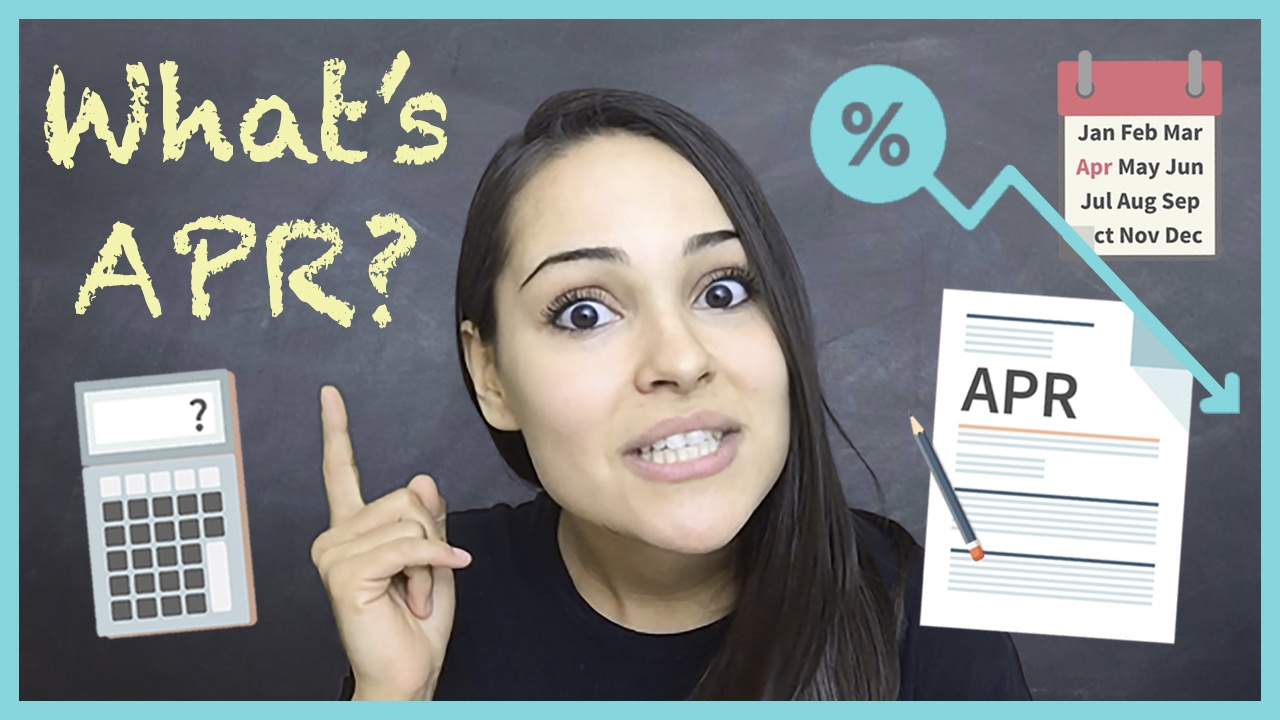
APR, or Annual Percentage Rate, is the yearly cost of borrowing money expressed as a percentage. You’ll encounter APR on credit cards, auto loans, mortgages, and other financial products. For credit cards, APR represents the interest rate charged on any unpaid balances you carry from month to month. In many cases, the APR and the interest rate are the same, but APR can also include certain fees, making it a more comprehensive measure of borrowing costs.
What Is an Annual Percentage Rate (APR)?
An Annual Percentage Rate (APR) is the yearly cost of borrowing money, expressed as a percentage. It represents how much you’ll pay in interest over a year when you borrow funds through products like credit cards, auto loans, mortgages, or personal loans.
APR includes the interest rate and, in some cases, additional fees or costs associated with the loan, giving you a clearer picture of the true cost of borrowing. For credit cards, APR usually refers to the interest charged on any unpaid balance you carry from month to month.
Franz W. Peren, Annual Percentage Rate (Springer Nature, 2023). Explains APR as a tool for comparing credit offers, including fees and discounts, and distinguishes between nominal and effective APR. On the other hand, David Vicknair & Jeffrey Wright discuss how APR and Annual Effective Rate (AER) are presented in accounting education, clarifying formulas and common misunderstandings.
APRs allow you to easily compare the total cost of loans offered by various lenders. For credit cards, the interest rate and APR are typically the same. However, APR does not include additional costs such as annual fees, balance transfer fees, foreign transaction fees, or other charges associated with the card.
Under the Truth in Lending Act (TILA) of 1968, lenders are required to disclose the APR they charge to borrowers. While credit card companies may advertise monthly interest rates, they must provide the full APR to customers before any agreement is finalized.
Also read: How to Cancel a Credit Card the Right Way
Types of APRs
The Annual Percentage Rate (APR) represents the yearly cost of borrowing money and plays a major role in how much consumers pay for credit cards, loans, and other financial products. Understanding the different types of APRs is important because each type applies in specific situations and can significantly affect your total borrowing cost. Below are the most common types of APRs you may encounter.
1. Purchase APR
The purchase APR is the interest rate applied to purchases made with a credit card when the balance is not paid in full by the due date. This is the most common type of APR and usually determines the interest charged on everyday spending. Many credit cards offer an introductory 0% purchase APR for a limited period.
2. Balance Transfer APR
A balance transfer APR applies when you move debt from one credit card to another. Credit card issuers often offer a low or 0% introductory APR on balance transfers to attract new customers. Once the promotional period ends, the APR typically increases to the standard rate.
3. Cash Advance APR
The cash advance APR is charged when you withdraw cash using your credit card. This APR is usually higher than the purchase APR and often begins accruing interest immediately, with no grace period. Cash advances may also include additional fees, making them an expensive borrowing option.
4. Introductory (Promotional) APR
An introductory APR is a temporary, reduced interest rate—often 0%—offered to new cardholders for a specific period. It can apply to purchases, balance transfers, or both. After the promotional period expires, the APR reverts to the regular rate.
5. Variable APR
A variable APR changes over time based on a benchmark interest rate, such as the prime rate. When the benchmark rate rises or falls, your APR adjusts accordingly. Most credit cards today use variable APRs, which means your interest rate is not fixed.
6. Fixed APR
A fixed APR remains constant and does not fluctuate with market interest rates. While less common for credit cards, fixed APRs are sometimes found in personal loans or installment loans, offering predictable monthly interest costs.
7. Penalty APR
A penalty APR is a higher interest rate applied when a cardholder violates the credit card terms, such as making late payments or exceeding the credit limit. Penalty APRs can be significantly higher than standard APRs and may remain in effect for an extended period.
8. Default APR
The default APR may be imposed when a borrower defaults on a loan or fails to meet repayment obligations. This rate reflects the increased risk to the lender and can substantially increase the cost of borrowing.
Read: Top 10 Best Banks in the United Kingdom
How to Calculate APR (Annual Percentage Rate)
Lenders calculate APRs for you, but it’s important to remember that each lender may include different fees in their calculation. When comparing APRs, always check which fees are factored in. If you’d like to calculate it yourself, you’ll need to know the loan’s fees, the total interest to be paid over its lifetime, the principal amount, and the number of days in the loan term. The formula for APR is as follows:
General Formula
The simplified formula for APR is:
This converts the periodic interest rate into an annualized percentage.
Step-by-Step Calculation
- Identify the loan amount – the principal you borrowed.
- Add up interest and fees – include upfront fees, closing costs, or finance charges.
- Divide by the loan amount – this gives you the rate of cost relative to the borrowed amount.
- Adjust for the loan term – convert the rate into a yearly figure by multiplying by 365 and dividing by the number of days in the loan term.
- Express as a percentage – multiply by 100 to get the APR.
Example
Suppose you borrow $1,000 for one year at 10% interest, with an additional $50 fee:
- Interest = $100
- Fees = $50
- Total cost = $150
So, the APR is 15%, which is higher than the nominal interest rate because it includes fees.
Comparing Annual Percentage Rate (APR) and Annual Percentage Yield (APY)
When dealing with loans, credit cards, or savings accounts, you’ll often come across the terms Annual Percentage Rate (APR) and Annual Percentage Yield (APY). While both are expressed as percentages and relate to interest, they serve different purposes. Understanding the difference between APR and APY is essential for making informed financial decisions.
What Is APR?
Annual Percentage Rate (APR) represents the cost of borrowing money over a year. It shows how much interest you pay on loans such as credit cards, auto loans, mortgages, and personal loans. APR focuses on what borrowers pay and may include interest charges and certain fees, depending on the financial product.
For credit cards, APR is the interest rate charged on unpaid balances. If you carry a balance from month to month, the APR determines how much interest is added. A higher APR means higher borrowing costs.
Example of APR Calculation
Suppose you borrow $1,000 on a credit card with an APR of 18%.
Annual interest cost:
Interest=$1,000×18%=$180\text{Interest} = \$1,000 \times 18\% = \$180
If the balance is carried for one year without payments, you would owe $180 in interest, making the total balance $1,180 (excluding compounding and fees).
What Is APY?
Annual Percentage Yield (APY) measures how much interest you earn on savings or investments over a year. Unlike APR, APY accounts for compound interest, which means interest is earned on both the original amount and the accumulated interest.
APY is commonly used for savings accounts, certificates of deposit (CDs), money market accounts, and investment products. The more frequently interest compounds, the higher the APY will be—even if the stated interest rate is the same.
APY Calculation Example
Assume you deposit $1,000 into a savings account with a 5% interest rate, compounded monthly.
APY Formula:
APY=(1+rn)n−1\text{APY} = \left(1 + \frac{r}{n}\right)^n – 1
Where:
-
rr = annual interest rate
-
nn = number of compounding periods per year
Calculation:
APY=(1+0.0512)12−1\text{APY} = \left(1 + \frac{0.05}{12}\right)^{12} – 1 APY≈0.0512 or 5.12%\text{APY} \approx 0.0512 \text{ or } 5.12\%
Interest Earned:
$1,000×5.12%=$51.20\$1,000 \times 5.12\% = \$51.20
So after one year, the total balance would be $1,051.20.
Key Differences Between APR and APY
| Feature | APR | APY |
|---|---|---|
| Purpose | Cost of borrowing | Earnings on savings |
| Used for | Loans and credit cards | Savings and investments |
| Compounding | Usually does not include compounding | Includes compounding |
| Focus | What you pay | What you earn |
Read: Factors that determine foreign exchange Rate of a country
Why APR and APY Matter
APR helps borrowers understand the true cost of credit, making it easier to compare loan offers. APY helps savers see the real return on their money, allowing them to choose accounts that maximize earnings.
For example, two savings accounts may offer the same interest rate, but the one with more frequent compounding will have a higher APY. Similarly, two loans with different APRs can result in significantly different repayment costs over time.
Which One Should You Pay Attention To?
-
If you are borrowing money, focus on the APR to minimize interest costs.
-
If you are saving or investing, focus on the APY to maximize earnings.
Understanding both APR and APY empowers consumers to compare financial products accurately and make smarter money decisions.
Read: Different types of SBA loans
What Is a Good APR?
A “good” APR depends on the type of financial product you’re considering and your personal credit profile. APRs vary widely across credit cards, auto loans, and mortgages, so context is key.
Credit Cards
- National Average: As of early 2026, the average credit card APR is above 20%.
- Good APR Range: If you have excellent credit, a good APR is typically below 15%, and some promotional offers may start at 0% introductory APR for a limited time.
- Factors: Your credit score, payment history, and the type of card (rewards, secured, balance transfer) all influence the APR offered.
Auto Loans
- Good APR Range: For new car loans, a good APR is generally 2%–5% if you have strong credit.
- Used Cars: Rates are usually higher, often 6%–10% depending on creditworthiness.
Mortgages
- Good APR Range: Mortgage APRs fluctuate with market conditions, but a competitive rate for borrowers with excellent credit is often 5%–6% in today’s environment.
- Consider Fees: Since APR includes closing costs and fees, two loans with the same interest rate can have different APRs.
How to Judge a “Good” APR
- Compare to the Average: Look at current national averages for the product.
- Check Your Credit Score: Higher scores unlock lower APRs.
- Consider Fees: APR includes certain fees, so always check what’s factored in.
- Look for Promotions: Introductory APRs (like 0% for 12–18 months on credit cards) can be excellent if used wisely.

Contact: Kokobest04@gmail.com
- Loan Refinancing vs. Debt Consolidation: What Is the Difference? - October 7, 2026
- How business revenue and credit scores affect loan size - October 3, 2026
- Business Line of Credit vs. Term Loan: Understanding the Difference - October 3, 2026