Last Updated on May 25, 2026 by admin
Credit plays a major role in modern finance. Whether someone is applying for a personal loan, mortgage, business loan, or credit card, lenders need a reliable way to decide if the borrower can repay the money. To make this decision, banks and financial institutions often rely on a framework known as the 5 Cs of Credit.
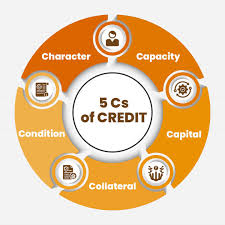
The 5 Cs of Credit are five important factors lenders use to evaluate a borrower’s creditworthiness. These factors help lenders measure risk before approving a loan or extending credit. Understanding the 5 Cs can help individuals improve their chances of getting approved and receiving better loan terms.
The five components are:
- Character
- Capacity
- Capital
- Collateral
- Conditions
Each of these factors gives lenders insight into how financially responsible a borrower is and whether lending money would be a safe decision.
Read: History and Origin of Banking in the World
Understanding the Purpose of the 5 Cs of Credit
Before lending money, financial institutions want assurance that the borrower will repay the debt on time. Lending always involves risk because there is a possibility that the borrower may fail to repay the loan.
The 5 Cs of Credit serve as a guideline that helps lenders reduce this risk. Instead of relying on only one factor, lenders look at the complete financial picture of the borrower.
For example:
- A borrower may have a high income but poor repayment habits.
- Another borrower may have limited income but excellent savings and a strong credit history.
By analyzing the 5 Cs together, lenders can make more balanced and informed decisions.
The framework is widely used in:
- Commercial banking
- Mortgage lending
- Personal loans
- Credit card approvals
- Small business financing
- Auto loans
Character
Character refers to the borrower’s reputation and willingness to repay debt. It is one of the most important aspects of credit evaluation because it reflects financial behavior and trustworthiness.
Lenders want to know if the borrower has a history of paying debts responsibly.
What Lenders Look At
To evaluate character, lenders usually examine:
- Credit reports
- Credit scores
- Payment history
- Bankruptcy records
- Previous loan repayment behavior
- Financial references
- Employment history
A strong repayment history indicates that the borrower is dependable and likely to repay future loans on time.
Credit Score and Character
A credit score is often the first thing lenders review when assessing character. A high credit score usually suggests responsible financial management.
Common factors influencing credit scores include:
- Paying bills on time
- Keeping credit card balances low
- Maintaining long credit history
- Avoiding excessive loan applications
- Managing different types of credit responsibly
Someone with late payments, defaults, or unpaid debts may appear risky to lenders.
Example of Character in Practice
Imagine two loan applicants:
Applicant A
- Pays bills on time
- Has a high credit score
- Never defaulted on loans
Applicant B
- Frequently misses payments
- Has unpaid debts
- Filed for bankruptcy in the past
Even if both applicants earn the same income, lenders are more likely to approve Applicant A because of stronger character.
Read: What’s the Difference between Credit Score vs Credit Rating
Capacity
Capacity refers to the borrower’s ability to repay the loan. It focuses mainly on income, employment stability, and existing debt obligations.
Lenders want to know whether the borrower earns enough money to comfortably handle monthly loan payments.
Debt-to-Income Ratio
One of the main tools used to measure capacity is the debt-to-income ratio (DTI).
The formula is:
DTI=Total Monthly Debt PaymentsGross Monthly Income×100DTI = \frac{\text{Total Monthly Debt Payments}}{\text{Gross Monthly Income}} \times 100
This ratio compares monthly debt payments to monthly income.
Example
Suppose a borrower earns $5,000 per month and already pays:
- $1,000 for rent
- $500 for car loans
- $300 for credit cards
Total monthly debt = $1,800
The DTI would be:
DTI=18005000×100=36%DTI = \frac{1800}{5000} \times 100 = 36\%
A lower DTI generally indicates better repayment ability.
Employment Stability
Lenders also prefer borrowers with stable employment. Someone who has worked consistently for several years may appear more financially reliable than someone who changes jobs frequently.
Self-employed individuals may need to provide:
- Tax returns
- Business records
- Bank statements
- Profit and loss reports
This helps lenders confirm steady income.
Why Capacity Matters
Even borrowers with excellent credit history can struggle if they lack sufficient income. That is why lenders pay close attention to repayment ability.
For instance:
- A person with a high salary but moderate debt may qualify easily.
- A person with low income and large debt obligations may face difficulties getting approved.
Capital
Capital refers to the borrower’s financial assets and personal investment. It measures how much money the borrower has available and how much they are willing to contribute personally.
Lenders see capital as a sign of financial strength and commitment.
Examples of Capital
Capital may include:
- Savings accounts
- Investments
- Retirement funds
- Property ownership
- Business assets
- Cash reserves
For business loans, lenders often want owners to invest their own money into the business before seeking outside financing.
Down Payments
In mortgage lending, capital is commonly represented through a down payment.
For example:
- A borrower buying a $300,000 house with a $60,000 down payment contributes 20% capital.
- A larger down payment reduces the lender’s risk because the borrower has more personal investment in the property.
Why Capital Is Important
Borrowers with significant savings or assets are generally viewed as less risky because they have financial reserves during emergencies.
If unexpected financial problems occur, these reserves may help borrowers continue making payments.
Capital also demonstrates financial discipline and long-term planning.
Collateral
Collateral refers to assets pledged to secure a loan. If the borrower fails to repay, the lender may seize the collateral to recover losses.
Secured loans usually require collateral, while unsecured loans may not.
Common Types of Collateral
Examples include:
- Houses
- Cars
- Land
- Equipment
- Savings accounts
- Inventory
- Investments
For example:
- A mortgage is secured by the home itself.
- An auto loan is secured by the vehicle being financed.
How Collateral Protects Lenders
Collateral reduces lender risk because there is a backup source of repayment.
If a borrower defaults:
- The bank may repossess the car.
- The lender may foreclose on the property.
- Business equipment may be sold to recover losses.
Because secured loans are less risky, they often come with:
- Lower interest rates
- Larger borrowing limits
- Longer repayment periods
Loan-to-Value Ratio
Lenders often use the loan-to-value ratio (LTV) when evaluating collateral.
The formula is:
LTV=Loan AmountAsset Value×100LTV = \frac{\text{Loan Amount}}{\text{Asset Value}} \times 100
Example
If someone borrows $160,000 to buy a house worth $200,000:
LTV=160000200000×100=80%LTV = \frac{160000}{200000} \times 100 = 80\%
Lower LTV ratios are generally safer for lenders.
Read: Definition of Credit Unions and How They Compare to Banks
Conditions
Conditions refer to the external factors affecting the loan and the borrower’s financial situation.
Lenders examine economic, industry, and market conditions before approving loans.
Factors Included in Conditions
These may include:
- Interest rates
- Inflation
- Economic growth
- Employment trends
- Industry performance
- Government policies
- Purpose of the loan
For example, lenders may become stricter during economic recessions because borrowers are more likely to experience financial hardship.
Loan Purpose
The reason for borrowing also matters.
Lenders may ask:
- Is the loan for business expansion?
- Is it for education?
- Is it for purchasing a home?
- Is it for risky speculation?
A well-planned and productive use of funds often improves approval chances.
Economic Environment
Economic conditions can strongly affect lending decisions.
During Strong Economies
- More loans may be approved
- Interest rates may be lower
- Businesses may grow faster
During Economic Downturns
- Lending standards may tighten
- Interest rates may rise
- Borrowers may face higher scrutiny
Conditions help lenders determine whether the timing and environment support successful repayment.
Read: What is Mortgages: Types, Interest Rates, and How to Repay”
How the 5 Cs Work Together
The 5 Cs are not used independently. Lenders usually evaluate all five together to form a complete picture.
A weakness in one area may sometimes be balanced by strength in another.
For example:
- A borrower with limited collateral but excellent income and credit history may still qualify.
- A borrower with poor credit may improve approval chances by offering strong collateral or a large down payment.
Lending decisions are rarely based on only one factor.
Which of the 5 Cs Is Most Important?
There is no universal answer because different lenders prioritize different factors depending on the type of loan.
However, many experts consider capacity and character the most important.
Why Character Is Often Considered Most Important
Character reflects trustworthiness and repayment behavior.
Even if someone has money and assets, lenders may hesitate if the borrower has a history of failing to repay debts.
A strong credit history often demonstrates:
- Responsibility
- Financial discipline
- Reliability
- Good money management habits
Since past behavior often predicts future behavior, character carries significant weight.
Why Capacity Is Extremely Important
Capacity determines whether the borrower can realistically repay the loan.
No matter how trustworthy someone appears, insufficient income creates repayment risk.
Lenders want assurance that monthly loan payments fit comfortably within the borrower’s budget.
Strong income and manageable debt obligations greatly improve approval chances.
Importance Depends on Loan Type
Different loans emphasize different Cs.
Mortgage Loans
Mortgage lenders often focus heavily on:
- Capacity
- Collateral
- Credit history
Business Loans
Business lenders may pay close attention to:
- Capital
- Conditions
- Business cash flow
Auto Loans
Auto lenders may prioritize:
- Credit score
- Income
- Vehicle value
Startup Financing
For startups, lenders may emphasize:
- Capital investment
- Business plans
- Industry conditions
The importance of each C changes depending on the lending situation.
How Borrowers Can Improve the 5 Cs
Understanding the 5 Cs allows borrowers to strengthen their financial profile before applying for loans.
Improving Character
Ways to improve character include:
- Paying bills on time
- Reducing outstanding debts
- Monitoring credit reports regularly
- Avoiding loan defaults
- Maintaining long-term financial stability
Building good credit takes time, but consistent financial responsibility helps significantly.
Improving Capacity
Borrowers can improve capacity by:
- Increasing income
- Reducing monthly debt
- Avoiding unnecessary expenses
- Paying off credit card balances
- Maintaining stable employment
Lower debt obligations make repayment easier.
Improving Capital
To strengthen capital:
- Build savings
- Invest responsibly
- Maintain emergency funds
- Increase down payments
- Grow personal assets
Financial reserves create confidence for lenders.
Improving Collateral
Borrowers can improve collateral strength by:
- Maintaining property value
- Keeping assets in good condition
- Reducing existing liens
- Offering higher-value security
Valuable collateral lowers lender risk.
Improving Conditions
Although borrowers cannot control the economy, they can improve loan conditions by:
- Applying during stable financial periods
- Presenting clear loan purposes
- Preparing strong business plans
- Demonstrating industry knowledge
Good preparation can influence lender confidence.
Advantages of the 5 Cs of Credit
The 5 Cs framework provides several benefits.
Better Lending Decisions
Lenders can make more informed and balanced choices.
Reduced Financial Risk
Evaluating multiple factors lowers the chances of loan defaults.
Fairer Assessments
Borrowers are judged using a broad financial picture rather than a single number.
Improved Financial Awareness
The framework encourages borrowers to manage finances responsibly.
Limitations of the 5 Cs
Although useful, the 5 Cs also have limitations.
Subjectivity
Some factors, especially character, may involve personal judgment.
Economic Changes
Unexpected events like recessions can affect repayment ability even for strong borrowers.
Limited Credit History
Young borrowers or first-time applicants may struggle because they lack established credit records.
Not Always Predictive
Past financial behavior does not guarantee future performance.
Despite these limitations, the 5 Cs remain one of the most widely used credit evaluation systems worldwide.
Real-Life Example of the 5 Cs
Suppose Sarah wants to apply for a small business loan.
Character
She has an excellent credit score and always pays bills on time.
Capacity
Her business generates stable monthly income, and her existing debts are manageable.
Capital
She contributes personal savings toward the business expansion.
Collateral
She offers business equipment as security.
Conditions
The market demand for her products is growing steadily.
Because Sarah performs well in all five areas, lenders are more likely to approve her loan with favorable terms.
Why the 5 Cs Matter to Consumers
Understanding the 5 Cs helps borrowers become financially prepared before seeking loans.
People who understand these principles can:
- Improve credit scores
- Reduce debt responsibly
- Build savings
- Prepare stronger loan applications
- Negotiate better interest rates
Financial knowledge also helps borrowers avoid unnecessary loan rejections.
Conclusion
The 5 Cs of Credit are an essential framework used by lenders to evaluate borrowers and reduce lending risk. By examining character, capacity, capital, collateral, and conditions, financial institutions can better determine whether a borrower is likely to repay a loan successfully.
Each C plays an important role:
- Character measures trustworthiness.
- Capacity evaluates repayment ability.
- Capital reflects financial strength.
- Collateral provides security.
- Conditions consider economic and market factors.
Although all five factors matter, character and capacity are often considered the most influential because they directly relate to repayment reliability and financial ability.
For borrowers, understanding the 5 Cs offers valuable insight into how lending decisions are made. Improving these areas can increase approval chances, lower interest rates, and create stronger long-term financial health.
In today’s financial world, the 5 Cs of Credit remain one of the most trusted tools for responsible lending and smart borrowing.

Contact: Kokobest04@gmail.com
- Loan Refinancing vs. Debt Consolidation: What Is the Difference? - October 7, 2026
- How business revenue and credit scores affect loan size - October 3, 2026
- Business Line of Credit vs. Term Loan: Understanding the Difference - October 3, 2026