Last Updated on June 3, 2026 by admin
When you need extra money for a major expense, debt consolidation, home improvement, medical bills, or an emergency, a personal loan can be a useful financial solution. However, before applying, it is important to understand the two main types of personal loans available: secured personal loans and unsecured personal loans.
Many borrowers focus only on interest rates and monthly payments, but the type of loan you choose can significantly affect your financial risk, approval chances, and borrowing costs.
So, what exactly is the difference between secured and unsecured personal loans? Which one is right for your situation?
This guide explains everything you need to know in simple terms, helping you make an informed borrowing decision.
Read: How to Get a Personal Loan with Bad Credit
What Is a Personal Loan?
A personal loan is a lump sum of money borrowed from a bank, credit union, online lender, or other financial institution. Once approved, you receive the funds upfront and repay them through fixed monthly installments over a specified period.
Most personal loans come with:
- Fixed interest rates
- Fixed monthly payments
- Defined repayment terms
- Predictable borrowing costs
Personal loans can be used for various purposes, including:
- Debt consolidation
- Medical expenses
- Home repairs
- Wedding costs
- Vacation expenses
- Emergency situations
- Major purchases
The biggest distinction between personal loans lies in whether they are secured or unsecured.
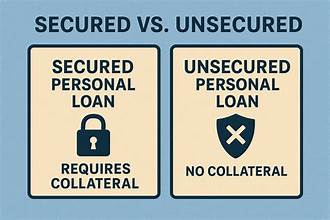
A secured personal loan is a type of loan that requires the borrower to pledge an asset as collateral. Collateral acts as a form of security for the lender, reducing their risk if you are unable to make your loan payments.
If you fail to repay the loan according to the agreed terms, the lender may have the legal right to take ownership of the asset and sell it to recover the outstanding balance.
Common assets used as collateral include:
- Savings accounts
- Certificates of Deposit (CDs)
- Cars, trucks, or other vehicles
- Investment accounts
- Real estate properties
- Valuable personal belongings
Since the lender has the added protection of collateral, secured personal loans are often easier to obtain than unsecured loans. They also tend to offer lower interest rates, higher borrowing limits, and more favorable repayment terms for qualified borrowers.
How Secured Personal Loans Work
To understand how a secured personal loan works, imagine you need $10,000 to pay for major home repairs. A lender agrees to provide the funds, but asks you to use your vehicle as collateral for the loan.
As long as you make your monthly payments on time and meet the terms of the agreement, your vehicle remains yours. However, if you stop making payments and default on the loan, the lender may have the legal right to repossess the vehicle and sell it to recover the outstanding debt.
Because the lender has the added protection of collateral, they face less risk. This reduced risk often translates into lower interest rates, larger loan amounts, and more flexible repayment terms for borrowers.
Read: Personal Loan vs Credit Card: Which Is Better?
Advantages of Secured Personal Loans
Lower Interest Rates
One of the biggest advantages of secured personal loans is the potential for lower borrowing costs. Since the lender has collateral as a form of security, they are generally willing to offer more competitive interest rates.
Over the life of a loan, a lower interest rate can save you hundreds or even thousands of dollars compared to an unsecured loan.
Easier Approval
Secured loans are often easier to qualify for, especially if your credit score is less than perfect. While lenders still review your credit history and income, the collateral provides additional reassurance that the loan can be recovered if necessary.
For borrowers with poor or limited credit histories, a secured loan may offer a better chance of approval.
Higher Borrowing Limits
Because the loan is backed by an asset, lenders are often comfortable approving larger loan amounts. The amount you can borrow may depend partly on the value of the collateral you provide.
Longer Repayment Terms
Many secured loans come with extended repayment periods, allowing borrowers to spread payments over several years. This can make monthly payments more manageable and easier to fit into a household budget.
Disadvantages of Secured Personal Loans
Risk of Losing Your Asset
The primary downside of a secured loan is the risk to your collateral. If you fail to make payments and default on the loan, the lender may seize the asset you pledged.
Depending on the type of collateral, this could mean losing your car, savings account, investment account, or other valuable property.
Additional Documentation
Applying for a secured loan typically involves more paperwork than an unsecured loan. Lenders may require documents that verify ownership and value of the asset being used as collateral.
Examples may include:
- Vehicle titles
- Property appraisals
- Investment account statements
- Savings account documentation
- Proof of ownership
This additional verification can make the application process longer and more complex.
Restrictions on Collateral
Not every asset qualifies as acceptable collateral. Lenders usually have specific requirements regarding the type, condition, age, and value of the asset being pledged. As a result, some borrowers may not have eligible collateral available.
What Is an Unsecured Personal Loan?
An unsecured personal loan is a loan that does not require collateral. Instead of relying on assets, lenders evaluate your financial profile to determine whether you qualify.
Factors commonly considered include:
- Credit score
- Credit history
- Income level
- Employment status
- Debt-to-income ratio
Because there is no collateral backing the loan, lenders assume greater risk. To offset that risk, unsecured loans often have stricter qualification standards and higher interest rates.
Read: The Impact of Artificial Intelligence on Banking
How Unsecured Personal Loans Work
Suppose you borrow $15,000 to consolidate existing debts. Unlike a secured loan, you are not required to pledge any personal assets.
If you make your payments on time, the loan proceeds as expected until it is fully repaid.
However, if you stop making payments, the lender cannot automatically take your property. Even so, defaulting can still have serious consequences. The lender may send the debt to collections, report missed payments to credit bureaus, or pursue legal action to recover the money owed.
Advantages of Unsecured Personal Loans
No Collateral Required
The most obvious benefit is that you do not have to put any personal assets at risk. Your home, vehicle, savings, and other valuables remain protected because they are not tied to the loan.
Faster Approval Process
Without the need to evaluate collateral, lenders can often process applications more quickly. Many online lenders provide approval decisions within minutes and may fund loans within a few business days.
Simpler Application Process
Since there is no collateral documentation to review, the application process is usually more straightforward. This convenience appeals to borrowers who need funds quickly and want to avoid extensive paperwork.
Flexible Use of Funds
Most unsecured personal loans can be used for a wide variety of purposes, including:
- Debt consolidation
- Home improvements
- Medical expenses
- Weddings
- Vacations
- Emergency expenses
This flexibility makes unsecured loans a popular financing option.
Read: How to Use Chase Mobile Banking
Disadvantages of Unsecured Personal Loans
Higher Interest Rates
Since lenders have no collateral to fall back on, they generally charge higher interest rates to compensate for the increased risk.
Borrowers with lower credit scores may face especially expensive borrowing costs.
Stricter Qualification Requirements
Approval for unsecured loans often depends heavily on your creditworthiness. Applicants with poor credit or unstable income may find it difficult to qualify.
Lower Borrowing Limits
Because there is no asset securing the debt, lenders may limit how much they are willing to lend. As a result, unsecured loans often come with lower maximum loan amounts than secured loans.
Larger Monthly Payments
Higher interest rates and shorter repayment terms can lead to higher monthly payments, which may place additional strain on your budget.
Key Differences Between Secured and Unsecured Personal Loans
While both loan types provide access to funds, they differ in several important ways.
| Feature | Secured Loan | Unsecured Loan |
|---|---|---|
| Collateral Required | Yes | No |
| Risk to Borrower | Potential loss of asset | No collateral risk |
| Interest Rates | Usually lower | Usually higher |
| Approval Requirements | Generally easier | Typically stricter |
| Credit Score Importance | Less significant | More important |
| Loan Amounts | Often larger | Usually smaller |
| Processing Time | May take longer | Often faster |
| Documentation | More extensive | Simpler |
Which Loan Is Easier to Get?
In general, secured loans are easier to obtain because lenders have collateral as a form of protection.
If you have:
- Poor credit
- Limited credit history
- Previous financial setbacks
a secured loan may improve your chances of approval.
However, the trade-off is the possibility of losing your pledged asset if you cannot repay the loan.
Which Loan Costs Less?
In most cases, secured loans are less expensive than unsecured loans because they involve less risk for the lender.
Borrowers often benefit from:
- Lower interest rates
- Better repayment terms
- Lower overall borrowing costs
For example, consider the following scenario:
Secured Loan
- Loan Amount: $10,000
- Interest Rate: 8%
- Loan Term: 5 Years
- Estimated Total Interest: $2,166
Unsecured Loan
- Loan Amount: $10,000
- Interest Rate: 15%
- Loan Term: 5 Years
- Estimated Total Interest: $4,274
Over time, the difference in borrowing costs can be significant.
When a Secured Loan May Be the Better Option
A secured personal loan may make sense if:
- You need to borrow a large amount.
- You own valuable assets that can be used as collateral.
- Your credit score is low.
- You want the lowest possible interest rate.
- You are confident you can make all payments on time.
For borrowers focused on affordability, secured loans can be an attractive option.
Read: Federal Deposit Insurance Corporation (FDIC): Purpose, Benefits, and Limitations
When an Unsecured Loan May Be the Better Option
An unsecured loan may be a better fit if:
- You do not own suitable collateral.
- You do not want to risk losing personal assets.
- You have strong credit.
- You need funds quickly.
- You prefer a simple application process.
Many borrowers appreciate the convenience and reduced personal risk that unsecured loans provide.
How Personal Loans Affect Your Credit Score
Whether secured or unsecured, personal loans can influence your credit profile.
Positive effects may include:
- Building a strong payment history
- Improving your credit mix
- Demonstrating responsible borrowing habits
Negative effects may include:
- Hard credit inquiries
- Missed payments
- Loan defaults
- Increased debt obligations
Making on-time payments remains one of the most important factors in maintaining a healthy credit score.
What Happens If You Default?
Defaulting on any loan can create serious financial consequences.
Secured Loan Default
If you default on a secured loan, the lender may:
- Repossess the collateral
- Sell the asset to recover losses
- Report the default to credit bureaus
- Pursue legal action if the sale does not fully cover the debt
Unsecured Loan Default
If you default on an unsecured loan, the lender may:
- Send the debt to collections
- Report missed payments to credit bureaus
- File a lawsuit
- Seek wage garnishment where permitted by law
Although unsecured loans do not involve collateral, default can still have a lasting impact on your finances and credit history.
Read:The 5 Cs of Credit Explained: Meaning, Uses, and Importance
Tips for Choosing the Right Personal Loan
Review Your Financial Situation
Before applying, take a close look at your:
- Monthly income
- Regular expenses
- Existing debt obligations
- Emergency savings
Borrow only what you truly need and can comfortably repay.
Compare Multiple Lenders
Shopping around can help you find the best deal. Compare:
- Interest rates
- Fees
- Repayment terms
- Customer reviews
- Funding timelines
Even a small difference in interest rates can lead to meaningful savings.
Understand the Risks
If you are considering a secured loan, think carefully about the asset being pledged.
Ask yourself: “Could I afford to lose this asset if my financial situation changed?”
Never use collateral that would create severe hardship if lost.
Check Your Credit Score
Knowing your credit score before applying can help you identify realistic loan options and avoid unnecessary applications.
Read the Fine Print
Before signing any loan agreement, review important details such as:
- Origination fees
- Late payment penalties
- Prepayment fees
- Default provisions
Understanding the terms in advance can help you avoid unexpected costs later.
What Lenders Are Actually Looking At
Whether you’re applying for a secured or unsecured loan, lenders will assess several things:
Credit score. Your history of managing debt — payments made on time, defaults, CCJs, bankruptcies. A higher score unlocks better rates on both types of loans.
Income and employment. Steady, provable income reassures lenders. Self-employed applicants may need to provide more documentation.
Existing debts. Your debt-to-income ratio matters. If you’re already stretched thin, lenders may be cautious about adding to your obligations.
The value of your collateral (for secured loans). They’ll verify that the asset is genuinely yours and worth enough to cover the loan.
Affordability. Responsible lenders are required to check that the repayments are affordable for you — not just whether they can technically recover their money.
A Few Things People Often Get Wrong
“Unsecured means risk-free.” Not quite. Defaulting on an unsecured loan can still result in court action, bailiff visits, and credit damage lasting six years. The absence of collateral just means the lender can’t immediately take a specific asset.
“Secured loans are only for big amounts.” While they’re common for mortgages and large loans, some lenders offer secured personal loans for smaller amounts. It just depends on the provider.
“My credit score is too bad to get any loan.” This isn’t always true. Secured loans can be accessible even with poor credit, though the interest rate may still be significant. There are also specialist lenders for people rebuilding their credit — though it’s worth being cautious about high-cost credit products that can make financial difficulties worse.
“The lowest rate is always the best deal.” Not necessarily. Always look at the total amount repayable over the life of the loan, including any fees. A slightly higher rate over a shorter term might cost less overall than a seductively low rate stretched over many years.
Final Thoughts
Both secured and unsecured personal loans can be valuable financial tools when used responsibly. The best choice depends on your financial situation, credit profile, borrowing needs, and comfort level with risk.
Secured personal loans often provide lower interest rates, larger loan amounts, and easier approval, but they require collateral and carry the risk of losing valuable assets if payments are not made.
Unsecured personal loans offer convenience, quicker approval, and no collateral requirements, making them attractive to borrowers with strong credit who want a simpler borrowing experience.
Before choosing either option, compare lenders carefully, review all loan terms, and ensure the monthly payments fit comfortably within your budget. The ideal loan is one that helps you achieve your financial goals while supporting your long-term financial stabili

Contact: Kokobest04@gmail.com
- HELOC vs Home Equity Loan: What Is the Difference? - June 27, 2026
- Wells Fargo Credit Card: Benefits, Features, and How to Choose the Best One - June 18, 2026
- What is Letters of Credit: Definition, Types, and Usage - June 16, 2026