Last Updated on October 3, 2026 by admin
Buying a first home is a major financial commitment, and choosing a mortgage involves more than looking for the lowest advertised interest rate. The amount you can borrow, the deposit you have saved, your income, credit history, mortgage fees and the type of property you intend to purchase can all affect the deal available to you.
For first-time buyers, the UK mortgage market includes major banks, building societies and specialist lenders offering different combinations of fixed rates, fees and loan-to-value (LTV) options. A mortgage with a slightly lower rate is not necessarily cheaper once arrangement fees and other costs are included.
This guide explains what first-time buyers should examine when comparing mortgage lenders, including eligibility, interest rates, APR, fees, affordability, credit history and repayment costs.
Read: Role and important of International Monetary Fund (IMF)
What Is a First-Time Buyer Mortgage?
A first-time buyer mortgage is a residential mortgage intended for someone purchasing a property for the first time. Individual lenders may apply their own definition and eligibility conditions.
For example, NatWest defines a first-time buyer as someone purchasing a property to live in as their main residence who has never previously owned a property.
A first-time buyer does not necessarily need a large deposit. Some lenders offer mortgages with a loan-to-value ratio of up to 95%, meaning the buyer provides a minimum 5% deposit and borrows the remaining 95% of the property’s value. The permanent Mortgage Guarantee Scheme introduced in 2025 also supports the availability of 91–95% LTV mortgages for eligible buyers across the UK.
Mortgage Lenders First-Time Buyers Can Compare
There is no single mortgage provider that will suit every buyer. Large lenders such as Nationwide, NatWest and Halifax have published products available to borrowers with smaller deposits, although eligibility and product availability depend on individual circumstances.
Nationwide
Nationwide has offered first-time buyer products at LTV levels reaching 95%. Its published 2026 product announcements demonstrate how rates and fees vary according to the deposit and mortgage product selected.
For example, Nationwide announced in August 2026 that one of its first-time buyer options was a two-year fixed mortgage at 95% LTV with no product fee at a stated rate of 5.34%. It also listed products with lower LTV ratios and different fee structures.
This illustrates an important point: borrowers should compare the complete mortgage cost rather than selecting an offer solely because its headline rate appears low.
NatWest
NatWest provides mortgages for first-time buyers and offers products up to 95% LTV. Its published guidance states that a 5% deposit may potentially qualify a buyer for a 95% LTV mortgage, subject to its lending criteria.
Its 95% mortgage information also states that qualifying properties must meet particular conditions, including a maximum property value of £600,000 for that product, and that the mortgage must be a repayment mortgage rather than interest-only.
Halifax
Halifax also offers 90–95% LTV mortgages to eligible borrowers. Its published example shows that a £250,000 property with a 5% deposit would require £12,500 from the buyer and a £237,500 mortgage.
These examples should not be interpreted as guaranteed offers. Mortgage availability depends on the applicant, property and lender’s criteria.
Read: Role and Impact of the World Bank
Eligibility Requirements
Before applying, a first-time buyer normally needs to demonstrate that the proposed mortgage is affordable. Lenders assess factors such as income, regular expenditure, existing financial commitments and the size of the deposit.
The UK government’s home-buying guidance states that lenders consider income and outgoings, including expenses such as utility bills, insurance and Council Tax. They may also consider whether the borrower could continue meeting repayments if circumstances change, including changes in interest rates or employment.
Typical information requested during a mortgage application may include:
- Proof of identity
- Evidence of income
- Bank statements
- Details of existing debts and financial commitments
- Evidence of deposit funds
- Information about the property being purchased
- Employment details
Self-employed applicants may need to provide additional financial records. The exact requirements vary between lenders.
Interest Rate, APR and Mortgage Cost
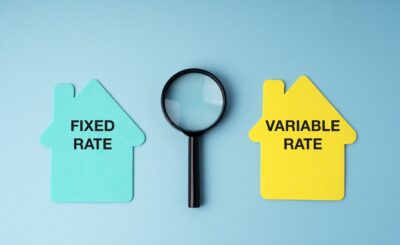
The interest rate determines how much interest is charged on the outstanding mortgage balance. Common mortgage structures include fixed-rate, tracker and variable-rate products.
A fixed-rate mortgage keeps the initial interest rate unchanged for an agreed period. This can make monthly payments easier to budget for during the fixed period.
A tracker mortgage generally follows an external reference rate, meaning the amount paid can rise or fall when that underlying rate changes.
The APR or annual percentage rate is intended to provide a broader indication of borrowing cost by taking certain charges into account rather than focusing solely on the headline interest rate. However, buyers should still examine the mortgage illustration and total cost carefully because individual circumstances and fees affect the actual amount paid.
For example, a mortgage carrying a lower interest rate but a £1,499 product fee may not necessarily cost less overall than a mortgage with a slightly higher rate and no fee.
Fees and Total Repayment
Mortgage costs can include a product or arrangement fee, valuation costs, legal expenses and other charges. Some products have no product fee, while others may charge hundreds or more than £1,000.
Consider a simplified example:
Property price: £250,000
Deposit: £25,000
Mortgage: £225,000
LTV: 90%
Term: 25 years
Illustrative interest rate: 5%
Using a standard repayment calculation, the monthly mortgage payment would be approximately £1,315. Over 25 years, if the rate remained at 5% throughout the entire term, the total of those mortgage payments would be approximately £394,500.
This is only an illustration. Real mortgages often have an initial fixed or discounted period followed by another rate, so the actual lifetime cost can differ substantially. Product fees and other purchase expenses would also need to be added.
A buyer should therefore compare both the monthly payment and the overall cost of the mortgage product.
Credit Score and Income Considerations
Your credit history can influence whether you qualify for a mortgage and which products are available to you. GOV.UK notes that credit score can affect both mortgage eligibility and the deals a borrower may be offered.
A strong credit record may help demonstrate responsible borrowing behaviour, but there is no universal credit-score number that guarantees mortgage approval. Lenders use their own assessment systems.
Income is equally important. A lender will consider how much you earn alongside your regular expenditure and existing commitments. A higher income does not automatically guarantee a larger mortgage because affordability calculations also consider spending and other financial obligations.
Buyers should avoid taking on significant new borrowing immediately before a mortgage application unless necessary, since additional commitments may affect affordability.
Comparison Table
| Lender | Example first-time buyer provision | Deposit/LTV example | Important consideration |
|---|---|---|---|
| Nationwide | First-time buyer fixed-rate products | Up to 95% LTV | Rates and fees vary by LTV and product |
| NatWest | First-time buyer and 95% LTV options | 5% deposit may be possible | Property and mortgage criteria apply |
| Halifax | 90–95% LTV options | From 5% deposit | Eligibility depends on circumstances |
| Other lenders | Various first-time buyer products | Often 90–95% LTV options | Compare the wider market before applying |
The table is intended as a starting point rather than a ranking. Mortgage products change frequently, so buyers should check the lender’s current product information before making a decision.
Read: HELOC vs Home Equity Loan: What Is the Difference?
Risks and Disadvantages
A first-time buyer should consider the potential disadvantages before committing to a mortgage.
High-LTV borrowing: A 95% mortgage requires only a 5% deposit, but it also means borrowing a larger proportion of the property’s value. This can result in higher monthly payments or a higher interest rate than some lower-LTV products.
Interest-rate changes: Fixed-rate borrowers are protected from changes during the fixed period, but their rate may change when that period ends. Borrowers on variable or tracker products can experience changes in monthly payments.
Fees: A low headline rate can be accompanied by a significant product fee. The fee should be included when comparing the overall cost.
Early repayment charges: Some fixed-rate mortgages impose charges if the borrower repays or switches the mortgage during a specified period.
Property risk: The property acts as security for the mortgage. MoneyHelper explains that failure to maintain mortgage repayments can ultimately result in repossession, although this is generally a last resort.
Affordability pressure: Mortgage payments are only one part of the cost of owning a home. Buyers also need to budget for Council Tax, insurance, utilities, maintenance and other household expenses.
Government Support for First-Time Buyers
Government-backed schemes can also be relevant when considering mortgage options. The permanent Mortgage Guarantee Scheme supports the availability of 91–95% LTV mortgages, potentially allowing eligible buyers to purchase with deposits as small as 5%.
In England, the First Homes scheme can provide eligible first-time buyers with a discount of at least 30% on the market value of qualifying properties. The discounted property must meet applicable price limits, and other eligibility conditions apply.
The government also lists other affordable home-ownership options, including shared ownership and Lifetime ISAs. The schemes available depend on location and individual circumstances.
Mortgage Repayment Calculator Example
For a quick estimate, buyers can use the following inputs:
Mortgage: £225,000
Term: 25 years
Illustrative rate: 5%
Estimated monthly repayment: about £1,315.
If the same £225,000 mortgage were calculated over 30 years at the same illustrative 5% rate, the monthly repayment would fall to approximately £1,208, but the total interest paid over the life of the loan would be considerably higher if the rate remained unchanged.
This demonstrates why the mortgage term matters as much as the interest rate. Extending the term can reduce the monthly burden but increase the overall cost of borrowing.
Read: Wells Fargo Credit Card: Benefits, Features, and How to Choose the Best One
Final Considerations
There is no mortgage lender that is automatically the right choice for every first-time buyer. Nationwide, NatWest, Halifax and other providers offer different products for borrowers with varying deposits, incomes and circumstances. The most suitable option depends on the combination of interest rate, fees, LTV, repayment period, flexibility and affordability.
First-time buyers should compare the total cost rather than the headline rate alone, check the lender’s eligibility criteria, review the mortgage illustration carefully and consider how repayments would be affected when an introductory fixed or discounted rate ends.
Mortgage products can change quickly. Rates, fees and eligibility criteria should therefore be checked directly with the lender or through an appropriately authorised mortgage adviser before an application is submitted.

Contact: Kokobest04@gmail.com
- Best Mortgage Lenders for First-Time Buyers in the UK - October 3, 2026
- Role and important of International Monetary Fund (IMF) - July 30, 2026
- Role and Impact of the World Bank - July 28, 2026